
B2B prospecting for freelancers and small businesses: a practical guide
Practical B2B prospecting guide for freelancers and small businesses in 2026: define your ideal customer, pick a channel, automate with Waalaxy and build a sustainable weekly flow without overspending.
Updated: 2026-08-15
 David Ortega·Analyst · Data and B2B databases

Featured tool
Waalaxy
B2B prospecting for freelancers, in a nutshell
Prospecting as a freelancer or microbusiness is nothing like doing it from a company with a sales team. You have little time, little budget and you can't afford to spend weeks without results. The way out is a simple system: define who you sell to, pick one channel, automate it with an affordable tool like Waalaxy and give it an hour a day. That's it.
In this guide I'll walk you through the full flow I would use if I were starting today, with just the right tools and without spending money on things you don't need.
Why prospecting as a freelancer is different from doing it at a company
If this sounds like you, start free with Waalaxy and adapt the flow to your industry.
A company with a sales team can afford to test three channels at once, buy a database with thousands of contacts and pay for a full sales suite. You can't. Your main resource is time, and every hour you spend prospecting is an hour you're not billing.
That's why almost every freelancer ends up making the same mistake. They open LinkedIn, send a couple of messages, get tired and quit. Prospecting without a system doesn't work. It works when it's repeatable and doesn't depend on your mood.
The good news is you don't need a team or a big budget. You need clarity about who you sell to and a tool that does the heavy lifting while you focus on replying to the people who respond.
Step 1: define who you sell to
Before touching any tool, you need to answer one question. Who exactly is the person that buys from you?
Saying marketing directors isn't good enough. That's way too broad. I always try to pin down the role, the industry, the company size and the problem they have. For example, marketing directors at ecommerce companies doing between one and five million in revenue who don't have their own prospecting team.
The more specific your definition, the easier they are to find and the more personalized your message can be. And the personalized message is what separates a reply from silence.
One trick I use. Write down in a single sentence who you help and with what problem. If you can't write it in one sentence, you don't have it clear yet. Go back to the start.
Step 2: pick your channel
For a freelancer, the two channels that actually work are LinkedIn and cold email. My advice is to start with just one and master it before opening the second.
LinkedIn is usually the best entry point. It's where the professionals are, it lets you see their role and company before you write, and the barrier to entry is very low. Plus, with an automation tool you can send dozens of invitations a day without being glued to the screen.
Cold email works very well in some industries, but it demands more preparation. You need a clean domain, proper authentication setup and time warming up the account before sending at volume. It's the next step, not the first one.
Step 3: automate LinkedIn with Waalaxy
This is where the tool comes in. Waalaxy automates your LinkedIn prospecting safely, simulating human behavior so LinkedIn doesn't penalize you.
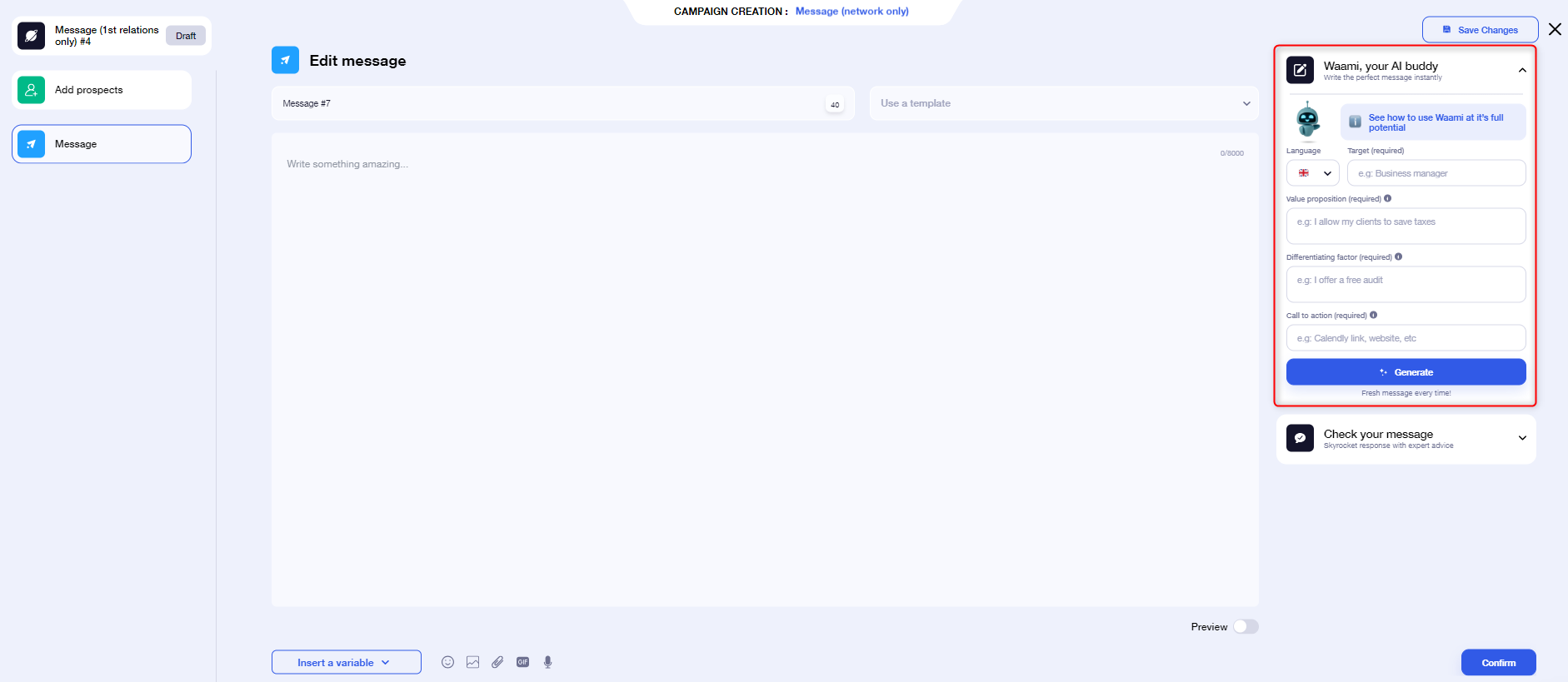
What I like most is that you can set up a full campaign in minutes without knowing anything about automation. You import your leads, create a sequence of actions and the campaign runs on its own. It visits the profile, sends the invitation with a personalized message and, once you're connected, sends the follow-up message.
The free plan includes 50 invitations a month, which is more than enough to get started and validate whether the channel works for you. Paid plans start at around 40 euros a month and go up depending on the invitation volume you need. For a freelancer, the jump to a paid plan pays for itself as soon as you land a single meeting.
Step 4: write messages people reply to
Automation gets you the connection, but the message is what gets the reply. And here most people fail for the same reason. They send messages that talk about themselves and their service, instead of talking about the other person's problem.
A good LinkedIn prospecting message is short, specific and references something real about the other person. No generic templates that are obvious a mile away. I try to mention their role, their company or something they've posted, and ask one simple question that invites a response.
The rule I apply to myself. If I'd be too lazy to reply to the message, I don't send it. Rewrite it until it passes that test.
Step 5: add cold email when you're ready
Once LinkedIn is consistently getting you meetings, you can open the second channel. Here you need a cold email tool like Instantly, which lets you connect unlimited sending accounts and warm up your domains so your emails don't end up in spam.
The ideal flow is a combined one. You get the contact on LinkedIn, get their email with a tool like Hunter or Apollo, and continue the conversation by email. That double touch is what usually unlocks the people who don't reply to the first message.
Don't rush it. If you open both channels at once in the first month, you end up doing both badly. One first, the other after.
A weekly routine you can sustain
Here's the pace I'd keep, one that doesn't eat your whole day.
Every morning, one hour of prospecting. Your Waalaxy campaign is already running on its own, so that hour goes to replying to people who answered, personalizing the important messages and reviewing who accepted your invitation.
Once a week, review the numbers. How many invitations sent, how many accepted, how many replies, how many meetings. If something isn't working, change the message or the audience before changing the tool. The problem is almost never the tool.
Consistency is the only thing you can't automate. A repeatable system you keep up for three months beats an intense push you abandon in week two.
Typical freelancer mistakes
The first one, prospecting everyone. If your message works for anyone, it interests no one. Define your ideal customer well and be selective.
The second one, expecting results in the first week. B2B prospecting is a game of weeks. The average reply doesn't come to the first message, it comes to the second or third. If you quit before that, you throw away the work you've done.
The third one, spending on expensive tools too early. You don't need the full sales suite in month one. You need an automation tool, a good message and consistency. The rest comes on its own when the volume justifies it.
What it costs to set this up
Let's do the numbers calmly. Waalaxy's free plan gives you 50 invitations a month without paying anything. When you want more volume, the paid plan runs around 40 euros a month.
If you add a cold email tool, you add about 37 dollars a month on Instantly's basic plan. And if you need verified emails, Hunter or Apollo have free plans to get you started.
All in, a freelancer can set up a complete prospecting system for under 100 euros a month, and for zero during the first few weeks. A single closed deal usually pays for a whole year of tools.
Final verdict
B2B prospecting for freelancers and small businesses comes down to three things: a well-defined ideal customer, one mastered channel and a tool that handles the repetitive work. Waalaxy is the most sensible option to get started on LinkedIn, with a free plan and a level of safety that lets you sleep easy.
You don't need more budget or more hours. You need a system and the consistency to keep it up. Start today with the free plan, validate that the channel works for you and scale only when the numbers ask for it.
Written by
David Ortega
Analyst · Data and B2B databases
Former SDR and data obsessive. He compares contact databases, email verification and enrichment tools with numbers on the table.
Specialty: B2B databases, Apollo, Hunter, verification