
Lusha: what it is, how it works and what it costs in 2026
Lusha sells verified contact data and charges by credits instead of per seat. Here is how its credit system works, what it costs in 2026 and why its Trustpilot score sits at 1.2 out of 5.
Updated: 2026-09-21
 David Ortega·Analyst · Data and B2B databases

Featured tool
Lusha
Lusha at a glance
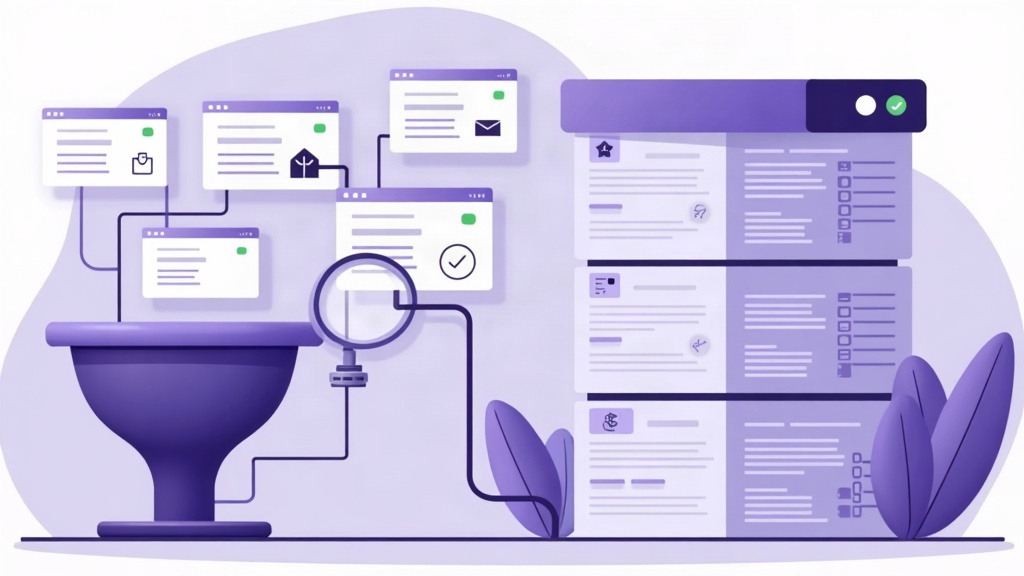
Lusha is a B2B database with 290 million verified contacts and 29 million companies. You pay by credits rather than per seat: a verified email costs 1 credit and a direct phone number costs 5. In 2026 it starts with a free plan of 40 credits a month, and its most popular plan runs at 299.95 dollars a month with 40,800 credits a year.
These are the figures as published on its website today:
| Data point | Value in 2026 |
|---|---|
| Verified contacts | 290 million |
| Companies | 29 million |
| Buying signals | 26, refreshed every week |
| Cost of a verified email | 1 credit |
| Cost of a direct phone number | 5 credits |
| Free plan | 40 credits a month, no card required |
| Cheapest paid plan (Starter) | 37.45 dollars a month billed yearly |
| Most popular plan (Premium) | 299.95 dollars a month, 40,800 credits a year |
| Yearly billing discount | 25 per cent |
| Background | Founded in 2016, based in Boston, around 400 employees |
| Trustpilot score | 1.2 out of 5 from 776 reviews |
What is Lusha and what is it for?
Lusha has been selling the same thing since 2016: contact data for professionals. Today it claims 290 million verified contacts, 29 million companies and 26 buying signals refreshed every week. Those are numbers in the same league as its competitors, so the useful question is not how many contacts it holds but whether the ones it returns are the ones you actually need.
In practice it is good for two specific jobs. The first is filling in what you already have. A query comes in, you look up the company, and the extension shows you the email and phone number of the person you care about without switching tabs. The second is getting direct phone numbers, and that is its strong ground. Some databases have more email volume, but when you need to speak to a purchasing manager on the phone, Lusha tends to get it right more often than the rest.
I have mostly used it for the first job, and it delivers. With caveats, which is what this review is about.
How Lusha works: extension, credits and MCP
The extension and the workspace
About 90 per cent of daily use goes through the browser extension. You install it, open LinkedIn or a company website, a button appears, and clicking it reveals the email and phone number. Since March 2026 the company has also been pushing its own workspace, where you can search contacts, filter by title, industry or company size, run bulk CSV enrichment and see team activity.
The extension also works inside CRMs and Gmail, which is where it really pays off. If your team runs on HubSpot or Pipedrive, enrichment happens on the contact record itself and nobody has to copy and paste anything.
The credit system, which is what matters
This is the detail that decides whether Lusha is cheap or expensive for you, and most reviews skip it. You do not pay per user. You pay per piece of data revealed, and not all data costs the same.
A verified email burns 1 credit. A direct phone number burns 5. Company data through the API costs 1, a de-anonymised IP address costs 2, and a recorded call with conversation analysis costs 8. Multiply that by your list and the problem shows up fast. If you need 200 emails and 50 phone numbers, you have spent 450 credits before writing the first message.
The practical consequence is that the plan is not measured in people sitting in front of the tool but in contacts touched. An SDR working short, tightly qualified lists stretches a plan a long way, while a team doing volume burns through it in a week.
Two warnings about credits
Unused credits on a monthly plan roll over, up to twice the monthly cap. On an annual plan it works differently. You get them all upfront and whatever you do not use is lost when the cycle closes. If you are considering paying for a full year to save that 25 per cent, work out what you will genuinely consume first, because the leftover does not travel with you.
The second warning comes from the company's own FAQ and shows up repeatedly on Trustpilot. You can cancel whenever you want, but accumulated credits drop back to the plan minimum when the cycle ends. There are reviews from August 2026 by users who watched more than 200 credits shrink to 40 after they cancelled.
The MCP connector, the 2026 novelty
Lusha has entered the AI assistant race with an MCP server. In plain terms, you can connect the database to Claude, to ChatGPT or to any client that supports MCP and ask for contact data in natural language from inside the assistant. On its website the company announces it with a very specific line, that Claude now connects directly to Lusha's verified data.
For a team already working with assistants this makes sense, because enrichment stops being a separate chore and becomes one more step in the conversation. It is also worth saying that everyone in this sector is announcing the same thing and the quality of those integrations is still being cooked.
What does Lusha cost in 2026?
Prices are published in dollars, with a 25 per cent discount if you pay for the full year. There is no euro price list, so the conversion is on you and depends on the day you pay. These are the plans as they appear today:
| Plan | Yearly price (per month) | Credits | What it adds |
|---|---|---|---|
| Free | 0 dollars | 40 a month | Extension, basic filters, CRM integrations |
| Starter | 37.45 dollars | 4,800 a year | Lookalikes, bulk enrichment, AI assistant |
| Pro | 52.45 dollars | 7,200 a year | Two seats, API, CSV enrichment, signals |
| Premium | 299.95 dollars | 40,800 a year | Five seats, advanced API, team management |
| Scale | Custom | Custom | SSO, credit allocation by group, priority support |
Two things I like about how the pricing is set up. The first is that the free plan does not ask for a card and gives you the extension, so you can see with your own eyes how often it gets the data right before paying anything. The second is that extra seats are cheap compared with the rest of the sector, where every additional user is charged at the price of a full plan.
What I do not like is the price curve. The jump from Pro to Premium multiplies the spend by nearly six, and there is nothing in between. If your team needs 12,000 credits a year, no plan fits. You either come up short on Pro or pay triple for Premium. And watch the free plan, because 40 credits are 40 emails or 8 phone numbers a month. It is good enough to test, not to work with.
Is Lusha worth it? What the reviews say
Here comes the uncomfortable part, and I would rather tell it with the numbers on the table, because a review that only says nice things about a tool is useless.
On Trustpilot, Lusha scores 1.2 out of 5 from 776 reviews, and 93 of them are from the last twelve months. For context, Apollo.io sits at 3.1 from 1,318 reviews and Hunter.io at 4.3. Lusha is the worst rated of the three by a wide margin, and it is not about the product.
Read the recent reviews and the pattern repeats, and it is almost never about data quality. What comes up again and again is people who are not Lusha customers discovering that their personal mobile number is being used for third party sales calls. Several reviews from September 2026 describe exactly that, with a data access request submitted and an inadequate or non-existent response. One of them reports that Lusha sent their personal data to an email address that was not theirs while the request was being processed.
The second block of complaints is billing. One review from July 2026 describes an automatic charge of more than 400 dollars on the personal card of an account the user no longer used, with support going silent from that point on. And the third block, the one I already mentioned, is credits evaporating on cancellation.
The company complies with the legal framework and says so on its site: GDPR, CCPA, SOC2 and ISO 27701, plus a do not call list. That does not spare it a reputation problem which by now is its biggest commercial risk, especially if you work with brands that take compliance seriously.
Lusha vs Apollo.io vs Hunter.io, which one to pick?
All three sell contact data, so the comparison makes sense, but they are not the same thing.
| Lusha | Apollo.io | Hunter.io | |
|---|---|---|---|
| Contacts | 290 million verified | More than 400 million | Search by domain |
| Strong at | Direct phone numbers | Volume and built in CRM | Finding and verifying emails |
| Pricing model | Credits per record | Subscription per user | Credits per search |
| Free plan | 40 credits a month | Yes, with limits | Yes, 25 searches a month |
| Trustpilot | 1.2 out of 5 | 3.1 out of 5 | 4.3 out of 5 |
If your bottleneck is phone numbers, Lusha plays with an advantage. If you need contact volume and do not want to pay for two tools, Apollo.io covers more ground. And if the job is finding the email for a specific domain for link building or a small campaign, Hunter.io is faster and has a better name.
Now, the question almost nobody asks before buying a database: do you know what you are going to write afterwards? Because the best record in the world sells nothing on its own. If your problem is the message and the follow up, start there and leave the database for later. For LinkedIn, Waalaxy handles the sequencing part and you can try the free version with no commitment. For email, Instantly offers 14 days free to new users, and to understand the channel before spending money you have what cold email is.
What I do not like about Lusha
Beyond reputation, three things would hold me back.
The first is a credit model with no spending ceiling. As with other tools in the sector, there is no alert when you have used 80 per cent of it. If your team reveals data without looking, next month's bill goes up and nobody knows why. With a subscription database you know what you will pay before you start.
The second is that the free plan cannot really evaluate phone numbers, which is precisely its strength. With 40 credits a month you get 8 numbers. To find out whether its phone numbers for a specific industry are up to date you need the paid plan, and by then the money is gone. A 14 day trial with 100 credits would have been a much better decision for its own business.
The third runs deeper and affects any tool selling personal data. Lusha trades phone numbers of people who in many cases never consented to it, and that creates two risks at once. The reputational one, already visible on Trustpilot. And the operational one, because in Europe using that data for prospecting has legal limits worth understanding before your team starts dialling. This is not my opinion, it is what the people filing access requests are saying.
Verdict: is Lusha worth it in 2026?
The product is good and the credit system is well thought out for anyone who needs a few contacts of very high quality. If your business runs on the phone, if you sell to mid sized companies and need to talk to the decision maker instead of sending an email they will never read, Lusha does something its competitors do not do as well. You can start with the free plan and check for yourself how many of your contacts show up with an email and a phone number.
That said, I would not recommend it as your only tool. The 1.2 on Trustpilot is not an accident or a rival's campaign, it is a pattern that repeats across recent reviews and has to do with how the database was built. If you work with European clients or with compliance sensitive brands, that risk belongs on the table before you sign anything.
And one recommendation that applies to any database. Before paying for the annual plan, take a list of twenty contacts you already know and check how many it returns correctly. With that percentage in hand the decision takes two minutes, and it does not depend on any review, including mine.
Written by
David Ortega
Analyst · Data and B2B databases
Former SDR and data obsessive. He compares contact databases, email verification and enrichment tools with numbers on the table.
Specialty: B2B databases, Apollo, Hunter, verification